What Certifications Are Required for Prefab Houses in 2026?

Time:2026-11-17 Author:Madeline
0%

Prefab construction is expanding, but “prefab” does not describe one legal category. A factory-built modular home may follow local building codes, while a manufactured home in the United States follows a separate federal framework. That distinction changes which approvals, inspections, and labels apply. So, what certifications are required for prefab houses? The answer depends on the home’s construction method, destination, and intended use.

Industry reports help explain why the question matters. McKinsey’s 2019 report, “Modular construction: From projects to products,” estimated that modular construction could create a $130 billion market in the United States and Europe by 2030. Dodge Data & Analytics’ 2020 “Prefabrication and Modular Construction SmartMarket Report” examined adoption, benefits, and barriers across the industry. Neither report establishes a universal certification checklist. That is the important caveat. In practice, buyers and project teams may need to verify building-code compliance, factory quality controls, structural and fire performance, energy requirements, and electrical or plumbing approvals. In the United States, HUD’s manufactured-housing standards apply to qualifying manufactured homes; modular homes generally require approval under applicable state and local codes. Other countries use different systems.

A certificate on a brochure is not enough. Check who issued it, which model it covers, and whether it remains valid for the project location. This guide will outline the main certification pathways for 2026, explain where requirements differ, and identify documents worth requesting before purchase. Some details remain jurisdiction-specific, and that deserves careful review.
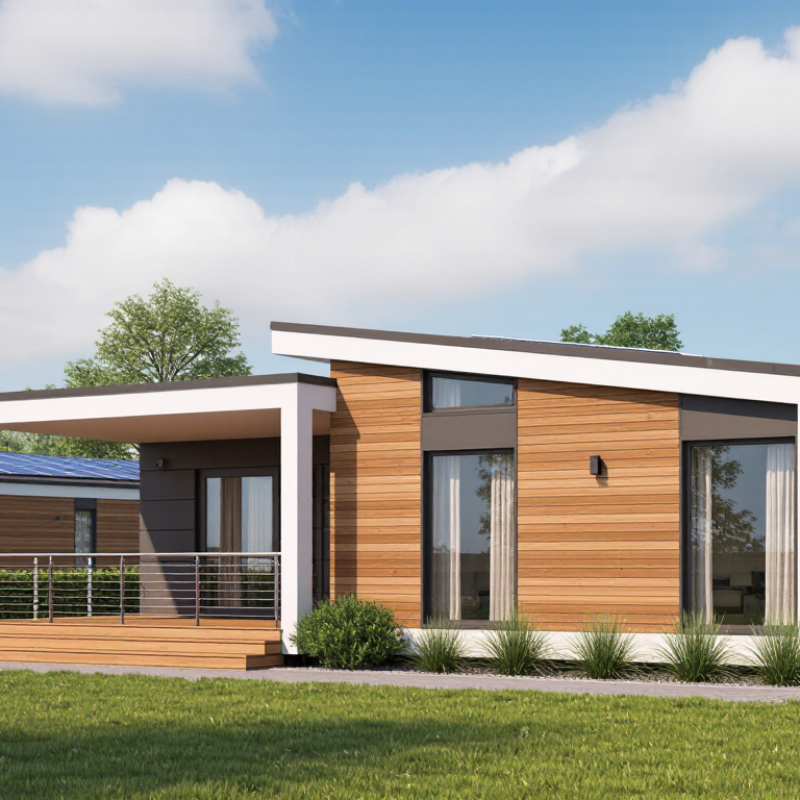
What Certifications Are Required for Prefab Houses in 2026?

How Prefab House Certification Requirements Are Determined in 2026

In 2026, prefab house certification requirements depend on where the home will be installed, how it will be used, and how local authorities classify it. A permanent dwelling may face different checks than a temporary site office or an accessory unit. The local building department typically confirms which codes and approvals apply. Ask before finalizing plans; assumptions can become costly.

Review the home’s design, components, and production process. Officials may request evidence for structural performance, fire safety, energy use, electrical systems, or plumbing. A product certificate does not necessarily approve the complete house or its foundation. Requirements can also differ when a project crosses regional boundaries. Keep drawings, test reports, and factory quality records together. Details matter. Rules may change, and a checklist can still miss a site-specific condition.

Tips: Send the site address, intended use, floor plans, and construction details to the relevant authority early. Ask which certificates apply to the factory-built sections and which inspections must happen on site. Record the response in writing. It is easy to overlook local requirements when relying only on a supplier’s general documentation.

Which Building Codes and Product Standards Apply to Prefab Houses?

Prefab houses do not follow one universal codebook. The rules depend on where the home will sit, how it is built, and whether it is modular, panelized, or manufactured housing. In the United States, local authorities may adopt editions of the International Residential Code (IRC), International Building Code (IBC), and International Energy Conservation Code (IECC), often with amendments. The 2024 editions are model codes, not automatic nationwide requirements. Check the edition adopted by the local building department. Small differences matter.

For factory-built construction, ICC/MBI 1200-2021 addresses planning, design, fabrication, and assembly; ICC/MBI 1205-2021 covers inspection and regulatory compliance. Product approvals may also require evidence for structural loads, fire resistance, insulation, windows, and electrical or plumbing systems. Ask whether evaluation reports, test results, or third-party inspection records are required.

A certificate alone may not cover the site foundation, utility connections, or final installation. The Modular Building Institute’s 2024 annual report, using Dodge Construction Network data, estimated permanent modular construction at 6.64% of U.S. construction in 2023. That growth makes clear documentation more useful, but it does not replace local approval. The tricky part? Jurisdiction. Even experienced teams can miss a local amendment, so confirm requirements before fabrication begins.

What Factory, Quality, and Safety Certifications May Be Required?

In 2026, prefab-house certification depends on the destination, building use, and installation method. There is no single certificate that automatically approves every factory-built home. Buyers may need evidence that the factory follows a documented quality system, such as ISO 9001. This certification is often voluntary, but contracts or project rules may require it. Worker-safety and environmental systems can also be requested, though they do not replace product approval.

For the house itself, local requirements may cover structural strength, fire performance, insulation, and electrical or plumbing components. Ask for test reports that identify the exact model and materials—not just a generic certificate. A fire-rating report should match the wall or panel assembly supplied. Check that document dates, factory details, and product serial numbers align. A factory certificate cannot prove that the completed home was installed correctly.

Tips: Request a certificate list before ordering. Confirm each document with the relevant local building authority or qualified inspector. Check whether reports cover the full unit or only one component. Small detail, big difference. Paperwork can look complete while leaving an important gap.

Prefab House Certifications and Approvals: 2026 Scope Examples

Requirements depend on the product type and the market where it is built or sold. This chart shows examples of approval routes that apply only within their defined scope.

How to read it: “Applies” means the route is required when the stated scope conditions are met; it does not mean every prefab house needs every item. In the United States, HUD Code requirements apply to manufactured homes within the HUD definition, while modular buildings are generally subject to applicable state and local building rules. In the European Union, CE marking applies to construction products covered by the relevant harmonised technical specifications or other applicable route—not automatically to an entire house. Quality-system certifications such as ISO 9001 are generally voluntary unless required by a contract or procurement rule.

Which Permits and Inspections Apply to Transport and Site Installation?

Permit and inspection rules for prefab houses depend on the route, the site, and the local authority. Before transport, confirm the module’s width, height, weight, and axle loads with the carrier. Oversized loads may need route approval, travel-time limits, warning signs, or escort vehicles. Bridge limits and low wires can change a planned route quickly. Small details matter.

Factory certification does not automatically approve delivery or installation. The site owner or builder may need building permits, zoning approval, and separate permissions for road access, utility connections, or crane placement. Ask the local building office which documents it expects, such as engineered drawings, foundation details, and installation instructions. Requirements vary, even between neighboring jurisdictions.

Inspections can cover excavation, foundation work, anchoring, structural connections, fire safety, and electrical or plumbing systems. Some checks must happen before work is covered; a missed inspection can mean reopening finished areas. Keep delivery records and inspection approvals together, and confirm who schedules each visit. The carrier, installer, and owner may assume someone else is handling it. That assumption is worth checking.

How Requirements Differ by Location and Intended Use

A prefab house does not have one universal certificate that guarantees approval everywhere in 2026. Requirements depend on where the home will sit and how people will use it. A permanent residence may need evidence that its structure, wiring, plumbing, insulation, and fire safety meet local building rules. A factory inspection or product certificate can support that evidence, but it may not replace permits or on-site checks.

Location changes the details. A home in a snowy region may need verified roof-load capacity; a coastal site may require stronger wind resistance. Seismic zones, flood exposure, and local energy rules can also affect plans. It varies. Ask the local building department which code edition applies, and whether it accepts the factory’s test reports or requires review by a local engineer.

Intended use matters, too. A full-time dwelling, seasonal cabin, rental unit, and temporary site office may face different standards. A unit used as a residence may need approved exits, smoke alarms, and energy documentation, while a temporary workspace may follow separate occupancy rules. Small details matter. Confirm the use classification before ordering, then collect drawings, material specifications, electrical and plumbing records, and inspection documents. Paperwork is easy to underestimate, and requirements can change between the factory and the final site.

What Certifications Are Required for Prefab Houses in 2026? — How Requirements Differ by Location and Intended Use
Location Prefab house type and intended use Main approvals, certifications, or standards What is typically required Important distinction
United States Permanent modular home used as a residence Applicable state and local building codes; state modular-building program requirements; local building and land-use permits Requirements depend on the state and local jurisdiction. A modular home is generally regulated under the building-code system applicable at its installation site. There is no single federal “prefab house certificate” for all modular homes. Factory inspection or state program labels may be required by the relevant state.
United States Manufactured home built for residential use HUD Manufactured Home Construction and Safety Standards (24 CFR Part 3280); HUD certification label; installation requirements under 24 CFR Part 3285 HUD Code compliance and the required certification label apply to homes covered by the federal manufactured-housing program. HUD-code manufactured homes are not the same category as modular homes. Site preparation, installation, zoning, and local permits can still be subject to state and local rules.
Canada Permanent factory-built home Applicable provincial or territorial building code and permits; CSA A277 certification procedure where required or accepted by the authority having jurisdiction The applicable code and approval process are set by the province or territory. CSA A277 addresses certification of factory quality-control procedures for factory-built buildings. It does not replace site-specific permits or the need to meet the applicable building code.
Canada Manufactured or mobile home Applicable provincial or territorial rules; CSA Z240 MH requirements where applicable; installation and site approvals Check the local authority’s requirements for the home type and installation site. CSA Z240 MH is a different standards series from CSA A277. The applicable requirements depend on the home’s classification and the jurisdiction where it will be installed.
European Union Factory-built dwelling placed permanently on a site National and local building regulations; planning and building approvals; construction-product rules, including CE marking when applicable Building and planning approval is determined nationally and locally. CE marking applies to construction products covered by applicable harmonised technical specifications or a relevant European Technical Assessment. It does not, by itself, certify an entire prefab house or replace building permission.
United Kingdom Permanent dwelling, including modular construction Building regulations and building-control approval; planning permission where required; applicable product requirements Requirements depend on the UK nation and the project site. England, Wales, Scotland, and Northern Ireland have different regulatory systems. A factory-built method does not generally remove the need to demonstrate compliance for the completed building or obtain required site approvals.
Australia Permanent dwelling or relocatable home used as a residence National Construction Code (NCC), as adopted and varied by each state or territory; local planning and building approvals; applicable Australian Standards State or territory building approval and site-specific compliance are central. Factory construction does not automatically exempt a home from the NCC or local approval processes. The applicable building surveyor or certifier can identify evidence required for the design, materials, transport, and installation.
New Zealand Permanent dwelling built off-site New Zealand Building Code; building consent under the Building Act 2004 unless an exemption applies; applicable local planning requirements A building consent is generally required for a new dwelling. CodeMark certification is a voluntary product or building-method certification route, not a universal prefab-house requirement. MultiProof may help with repeat use of an approved standard design, but does not remove all site-specific approvals.
Any location Temporary site accommodation, tourism unit, office, or other non-residential use Local building, fire, accessibility, occupancy, planning, and utility requirements as applicable The intended use and length of occupancy can change the approval pathway. Calling a unit “temporary” or “portable” does not automatically exempt it from permits or safety rules. Confirm classification with the local authority before purchase or installation.

Planning note: Requirements in 2026 depend on the jurisdiction, the home’s legal classification, its intended use, and its installation site. Confirm current rules with the relevant building authority before ordering or installing a prefab house.

FAQS

Is there one certificate that approves every prefab house?

No. Approval depends on location, building use, and installation method. A factory certificate alone is not enough.

What factory documents should buyers request?

Request quality-system records and a list of product test reports. Check that reports identify the exact model, materials, and factory.

Do factory certificates prove a home was installed correctly?

No. Site inspections may check foundations, anchoring, structural connections, and utility systems. The distinction is easy to miss.

What should a fire-safety report cover?

It should match the supplied wall or panel assembly. Compare its dates and product details with the delivered unit.

Which permits might be needed before delivery?

Oversized modules may require route approval, travel limits, warning signs, or escorts. Confirm dimensions, weight, and axle loads with the carrier.

What site approvals may be required?

Local authorities may require building or zoning approval, utility permissions, and crane-placement approval. Rules vary by location.

What inspections can happen during installation?

Inspections may cover excavation, foundations, anchoring, fire safety, and electrical or plumbing work. Some checks occur before areas are covered.

How does location affect prefab-house requirements?

Snow, wind, seismic risk, flooding, and energy rules can change design requirements. Ask which local code edition applies.

Does intended use change the approval process?

Yes. A full-time home, seasonal cabin, rental unit, or temporary office may face different standards. Confirm the use classification before ordering.

How can buyers avoid missing paperwork?

Keep drawings, material records, delivery documents, and inspection approvals together. Confirm who schedules each inspection; people may assume someone else will do it.

Conclusion

Determining what certifications are required for prefab houses in 2026 depends on where the home will be built, how it will be used, and which parts are manufactured off-site. Requirements may involve compliance with local building codes and applicable product standards for structural performance, fire safety, energy efficiency, and other relevant features. A certification or test report for a component does not necessarily replace approval of the complete building, so buyers and project teams should confirm how local authorities assess the finished home.

Factory quality and safety documentation may also be requested, while transport and installation can involve separate permits, inspections, or site-specific checks. Requirements can differ for permanent residences, temporary structures, and other intended uses, as well as between jurisdictions. Before production or delivery, verify current requirements with the relevant building department and qualified local professionals, and clarify which party is responsible for each approval, inspection, and document.

Madeline

Madeline

Madeline is a dedicated marketing professional with a wealth of expertise in our company's core offerings. With a keen understanding of the industry, she brings a unique perspective to her role, consistently delivering high-quality content that highlights the superior aspects of our products. As......