Transporting a modular house from China to another country is more than booking ocean freight. It requires design coordination, structural planning, export preparation, and careful destination delivery. The right method depends on the house size, module weight, port access, road limits, and installation site.
Architect Peter DeMaria, an early advocate of modular construction, said, “Modular construction is the future of architecture.” His statement reflects a practical reality. Factory production can improve consistency, but international transport adds demanding variables. A completed module may travel inside a reinforced steel frame, wrapped against moisture, and loaded onto a flat-rack container. Smaller panels may fit standard containers more efficiently. That choice affects cost, handling, and damage exposure.
How to transport modular houses internationally begins with transport-friendly design. Engineers should confirm lifting points, center of gravity, maximum dimensions, and temporary bracing before production starts. A shipping survey can identify whether cranes, barges, or special trucks are available at both ends. It is an important step.
Export documents must match the cargo precisely. Commercial invoices, packing lists, certificates of origin, fumigation records, and insurance documents may be required. Import duties, building approvals, and local safety standards also need early review. Ocean insurance should cover loading, transit, transshipment, and inland delivery.
The process is not always smooth. A route that looks economical may lack suitable roads near the site. A low bridge can change the entire plan. Weather can delay lifting operations. Careful planning reduces surprises, but it cannot remove every risk. Reliable suppliers should provide drawings, loading photographs, tracking updates, and realistic delivery schedules.
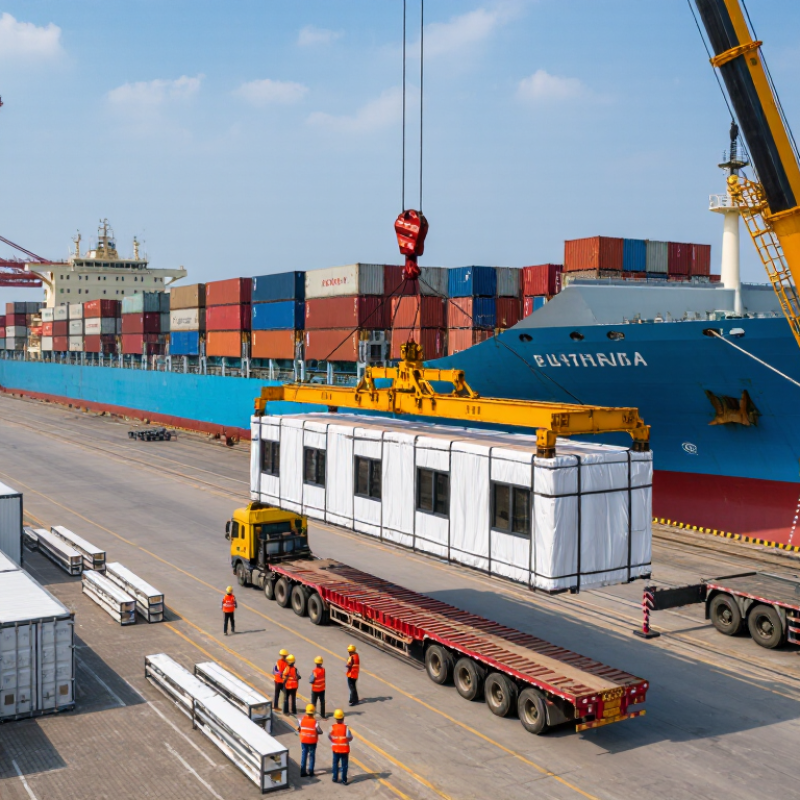
Transporting modular houses from China worldwide begins with identifying the house type. Flat-pack units need site assembly, while volumetric modules arrive mostly complete. Foldable designs reduce container space but require careful opening procedures.
Specifications must match the destination site. Confirm dimensions, floor loading, insulation levels, electrical systems, plumbing connections, and fire-resistant materials. A small measurement error can affect permits, cranes, and final installation. It happens more often than expected. Export documents should accurately list materials, quantities, package sizes, and gross weight. Shipping teams also need the loading port, destination port, delivery address, and unloading method.
Tips: Measure each module after packaging, not only before production. Ask for packing photos and a detailed loading plan. Check whether the route includes narrow roads, bridges, or height restrictions. Select container shipping for compact packages and breakbulk transport for oversized modules. Protect windows, corners, and exposed fittings with reinforced wrapping. Moisture indicators can reveal damage during long sea voyages.
Reliable transport requires coordination between the factory, freight forwarder, customs broker, and installation crew. Keep one approved specification sheet for everyone. Changes made late can create delays and unexpected costs. A practical plan should allow extra time for port inspections, weather, and crane availability. Perfect schedules are rare. Clear records make corrections faster.
How to Transport Modular Houses from China Worldwide?
Preparing a modular house for overseas transport requires more than strong wrapping. Each module should be inspected by qualified engineers before leaving the factory. Check the frame, lifting points, doors, windows, plumbing, and electrical connections. Record measurements and weight accurately. A small error can affect loading plans, permits, and port handling.
Protect exposed surfaces with moisture-resistant materials, especially during long sea voyages. Seal windows and openings, but allow controlled ventilation to reduce condensation. Remove loose fixtures and secure cabinets, pipes, and interior panels. Use clear labels showing lifting points, module numbers, weight, and orientation. Detailed photos can help crews rebuild the house correctly after arrival. In practice, the first packing plan is rarely perfect. Review it after a trial loading inspection.
Transporting a modular house begins with the route, not the booking form. Measure every module, including packaging, lifting points, and temporary supports. A 3.2-meter-wide section may need special road permits after arrival. Check the factory port, destination port, inland distance, bridge limits, and seasonal weather before choosing a sailing schedule.
Shipping methods should match the module design. Standard containers suit smaller panels and knock-down components. Flat-rack containers work better for oversized walls, frames, and assembled rooms. Roll-on/roll-off shipping can handle large units, but the modules must support safe rolling and lashing. It may appear cheaper, yet port handling and inland delivery can change the final cost.
Choose carriers with proven project-cargo experience, suitable equipment, and clear damage procedures. Request details about crane capacity, cargo insurance, moisture protection, and tracking updates. Photos before loading matter. So do weight certificates and packing lists. A carrier that only offers a low rate may overlook an awkward road turn or limited port crane.
Allow extra time. Customs documents, inspections, and local permits rarely move as smoothly as expected. Even careful plans can fail when a module arrives five centimeters too wide. I have found that a pre-shipment loading rehearsal often reveals weak supports and missing labels. That small delay can prevent expensive damage later. Keep every measurement current, especially after design changes.
Transporting a modular house from China is less about booking a vessel and more about controlling paperwork. Before production, confirm the destination country’s building codes, zoning rules, fire ratings, and energy requirements. Ask a qualified customs broker to verify the HS code for each component, rather than classifying the entire house as one product. Misclassification can delay release or change the duty rate. Small errors matter.
Prepare a commercial invoice, detailed packing list, bill of lading, certificate of origin when required, and cargo insurance documents. Include each unit’s material, quantity, value, dimensions, and gross weight. Technical drawings and conformity certificates may be needed for structural, electrical, plumbing, or insulation components. Wooden pallets and crates often require approved treatment and marking under international plant-health rules. Confirm the agreed Incoterm clearly. It should state who manages export clearance, freight, import duties, and delivery.
Import regulations vary by country and sometimes by region. The importer of record may need construction permits, product testing, or an inspection before customs release. Check whether local authorities require translated manuals, energy labels, or engineer approval. Send the document package for pre-arrival review, ideally before the container leaves China. Keep records matching the physical cargo; one missing screw list can become a serious discrepancy. The process is not perfect. Regulations change, and a broker’s first answer may need verification. A written confirmation from customs or a local compliance specialist is safer than an assumption.
How to Transport Modular Houses from China Worldwide?
Coordinating delivery begins with accurate module data. Record dimensions, weight, lifting points, center of gravity, and packing limits. These details determine the vessel, container, truck, crane, and route. Sea freight remains essential because about 80% of global merchandise trade by volume moves by sea, according to UNCTAD’s Review of Maritime Transport 2023. Oversized modules may require breakbulk handling, port permits, and carefully timed inland transport. A small measurement error can delay an entire project. That deserves more attention.
Unloading needs a site-specific method statement. Confirm road width, turning radius, ground bearing capacity, crane reach, weather exposure, and temporary storage space. The World Bank’s Logistics Performance Index 2023 shows that reliability depends heavily on shipment tracking, infrastructure, and timely border processes. These factors matter after arrival, not only during export. On-site assembly should follow numbered modules, approved lifting plans, torque records, weather sealing, and utility connection checks. Local engineers should verify foundations and structural interfaces because drawings cannot capture every soil condition. My practical view is simple: factory precision does not guarantee site precision.
Tips: Share a complete installation pack before departure. Include lifting diagrams, bolt schedules, foundation tolerances, electrical layouts, and emergency contacts. Photograph every module before loading. Use GPS milestones and buffer days around ports and cranes. Keep one spare sealing kit on site. It may seem excessive, but missing a small gasket can stop a whole wall section. Review the plan with the local crew; their criticism often finds problems remote teams miss.
| Logistics Stage | Planning Dimension | Typical Data or Range | Recommended Coordination | Key Risk-Control Point |
|---|---|---|---|---|
| Module Classification | Transport format | Flat-pack, knock-down, containerized, flat-rack, or breakbulk shipment | Select the format after confirming module dimensions, weight, lifting points, and destination-road restrictions. | A complete volumetric and weight list should be prepared before booking transport. |
| Container Planning | Standard 20-foot container | Approximate internal space: 5.90 m × 2.35 m × 2.39 m; typical maximum payload is about 25–28 tonnes, subject to equipment limits. | Use for compact components, fittings, furniture, and smaller prefabricated units. | Actual allowable cargo weight depends on the container, vessel, terminal, road, and local regulations. |
| Container Planning | Standard 40-foot high-cube container | Approximate internal space: 12.03 m × 2.35 m × 2.69 m; typical maximum payload is about 26–28 tonnes, subject to equipment limits. | Use for longer or higher-volume components that remain within container loading dimensions. | Measure packaged cargo, not only the unassembled product, because protective packaging affects clearance. |
| Oversize Cargo | Flat-rack or open-top shipment | Suitable for modules exceeding normal container height, width, or loading geometry; dimensions and weight are quoted individually. | Submit a cargo drawing, center-of-gravity information, lifting plan, and securing method before vessel confirmation. | Oversize cargo may require special terminal handling, route surveys, permits, and extra inland transport equipment. |
| Factory Preparation | Pre-shipment documentation | Commercial invoice, packing list, transport dimensions, gross weight, HS classification, lifting points, installation drawings, and cargo photographs. | Keep document descriptions, quantities, and package marks consistent across customs, shipping, and site records. | Incorrect dimensions or package counts can cause customs delays, re-handling, or delivery changes. |
| Origin Inland Transport | Factory-to-port preparation | Common planning window: 1–5 days for standard cargo; longer for oversize permits, escorts, route checks, or special lifting. | Confirm truck type, loading appointment, port cut-off time, cargo insurance, and seal or securing requirements. | The selected route must accommodate bridge clearances, turning radii, axle-load limits, and overhead utilities. |
| Ocean Transit | Indicative port-to-port sailing time | East and Southeast Asia: 7–20 days; Middle East: 20–35 days; Europe: 30–45 days; North America: 18–45 days; Australia and New Zealand: 15–30 days; Africa: 30–50 days. | Use the sailing range for preliminary planning only and add time for transshipment, port congestion, customs, and inland delivery. | Transit time varies by origin port, destination port, season, service route, weather, and cargo type. |
| Destination Customs | Clearance preparation | Typical document review: 1–5 working days when documents are complete; physical inspection or regulatory review may extend the period. | Check import duties, construction-product regulations, electrical requirements, timber treatment rules, and local building-code documents. | The importer or local customs representative should confirm requirements before cargo leaves the factory. |
| Destination Inland Delivery | Port-to-site planning window | Standard cargo: commonly 1–7 days after release; oversize or remote-site deliveries may require several additional days or weeks. | Arrange final-mile trucks only after confirming customs release, site access, unloading time, and weather conditions. | A delivery vehicle must be compatible with the module length, width, height, gross weight, and road restrictions. |
| Site Readiness | Minimum site conditions | Stable foundations, level bearing surfaces, compacted access roads, sufficient turning space, drainage, utilities, and safe storage areas. | Complete a site survey with access photographs, road widths, overhead clearance, slope information, and foundation coordinates. | The site should be ready before delivery to avoid demurrage, temporary storage, or repeated handling. |
| Unloading Operations | Crane selection | Crane capacity is determined by module weight, lifting radius, boom configuration, ground conditions, and safety margin; the rated capacity at the actual radius is critical. | Prepare a lifting plan showing crane position, outrigger placement, rigging arrangement, exclusion zones, and communication procedures. | Nominal crane capacity alone is not sufficient; capacity decreases as the working radius increases. |
| Unloading Operations | Lifting and rigging equipment | Use certified slings, shackles, spreader beams, tag lines, and lifting accessories suitable for the module’s designated lifting points. | Inspect all equipment before use and assign a qualified lifting supervisor and signal person. | Never lift from unapproved structural points or use packaging straps as lifting gear. |
| On-Site Assembly | Typical installation sequence | Foundation check, module placement, alignment, structural connections, weather sealing, utility connections, interior finishing, and inspection. | Follow approved assembly drawings and record connection checks, waterproofing details, and utility tests. | Local construction regulations and professional inspections may determine the final acceptance process. |
| Assembly Scheduling | Indicative installation productivity | About 1–3 working days per module for placement and primary connections under favorable conditions; complete project duration depends on scope and site complexity. | Schedule delivery in installation order and maintain sufficient space for temporary storage and crane movement. | Rain, wind, foundation corrections, missing components, and utility delays can reduce daily productivity. |
| Weather and Safety | Operational controls | Stop lifting when wind, lightning, visibility, ground stability, or other conditions exceed the limits in the approved lifting plan. | Monitor local weather, secure loose materials, provide personal protective equipment, and maintain a controlled exclusion zone. | The lifting supervisor should have authority to postpone operations when conditions are unsafe. |
| Project Contingency | Recommended schedule buffer | Add approximately 10–20% to the combined transport and installation schedule for customs, congestion, weather, and site-related uncertainty. | Use milestone tracking for factory completion, vessel departure, customs release, site readiness, delivery, unloading, and final inspection. | Remote sites, island destinations, seasonal weather, and oversize cargo generally require a larger contingency. |
Flat-pack units require assembly at the destination. Volumetric modules arrive mostly complete. Foldable models save container space but need careful opening.
Measure each module after packaging. Include width, height, length, lifting points, supports, and gross weight. Small errors can affect permits and cranes.
Standard containers suit panels and knock-down parts. Packaged components should fit securely inside the container. Confirm their final dimensions.
Flat-rack containers suit wide walls, frames, and assembled rooms. Roll-on or roll-off transport may work for rollable units. Safe lashing is essential.
Check the unloading address, road width, bridge limits, height restrictions, and crane access. A 3.2-meter module may need special road arrangements.
Prepare accurate packing lists, material descriptions, quantities, package sizes, and weight certificates. Include loading and delivery details. Keep one approved specification sheet.
Reinforce windows, corners, and exposed fittings. Use moisture indicators inside vulnerable packages. Take loading photos before the vessel departs.
Coordinate the factory, freight forwarder, customs broker, and installation team. Add time for inspections, weather, permits, and crane availability. Perfect schedules are uncommon.
A rehearsal can reveal weak supports, missing labels, or poor lifting positions. It may delay loading slightly. That delay is often worthwhile.
Transporting modular houses from China to destinations worldwide requires careful planning from product definition to final assembly. The process begins with understanding the house type, dimensions, materials, weight, packaging, and technical specifications, since these factors affect loading, container selection, and shipping costs. Each module should be properly reinforced, protected against moisture, and labeled for efficient handling during international transport.
A successful plan for how to transport modular houses internationally also includes comparing routes, carriers, and shipping methods according to the destination and delivery schedule. Export and import documents must be prepared accurately, while customs clearance, certification, duties, and local building requirements should be reviewed in advance. After arrival, delivery appointments, unloading equipment, temporary storage, and access conditions must be coordinated with the receiving site. Clear communication among suppliers, logistics providers, customs representatives, and local installation teams helps ensure smooth delivery and safe on-site assembly.

BYT Homes